
Johnson County Bench Warrants Explained
Johnson County has no single countywide bench-warrant list or unified procedure. “Bench warrant” is a common reader term for a court order after a missed appearance or other failure to comply. Local courts may use a more exact label, such as Burleson’s alias warrant or a post-judgment capias pro fine.
A missed court date and a failure to pay after judgment are different triggers. Find the court named on the citation or case paper, then ask what instrument was issued and what action is required.
Johnson County Bench Warrants Use Local City Labels
Burleson describes an alias warrant after no plea or a missed initial or scheduled appearance. Its capias pro fine follows a judgment when a person does not pay or complete community service. Joshua also separates an arrest warrant for a missed first appearance from a capias pro fine after judgment.
These examples show why the phrase “bench warrant” is not enough to choose a payment or appearance route. Ask the clerk to read the exact label and explain whether the next step is a court date, bond, payment, or hardship request.
The Burleson warrant instructions explain its local terms.
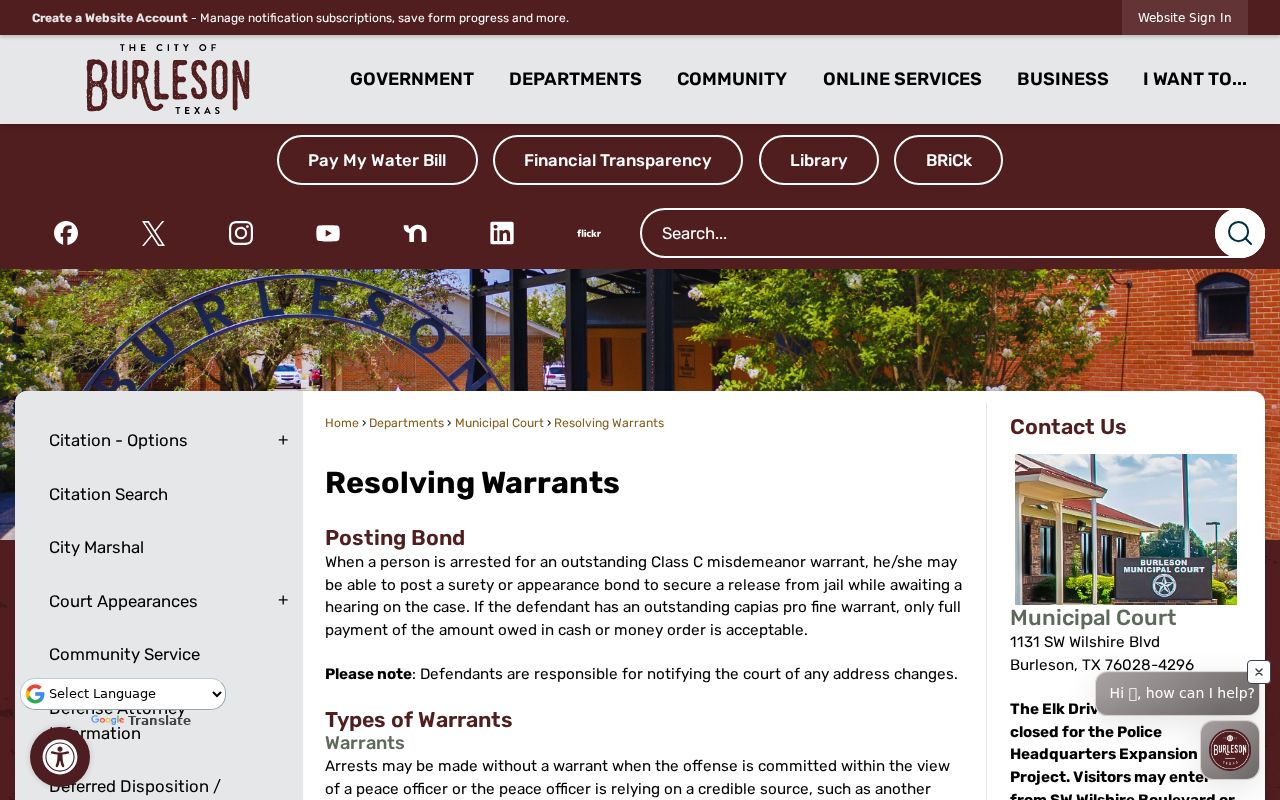
The city’s definitions distinguish a missed appearance from a post-judgment failure to pay.
How Johnson County Bench Warrants Are Issued
A judge may issue a warrant after the court record shows a missed appearance or an unmet judgment term. The issuing court then controls the case entry and any recall or new setting. The sheriff or a city marshal may serve the order, but service does not move the power to clear it away from the court.
Johnson County sources do not describe a single warning period across all courts. Cleburne, Burleson, and Alvarado state different appearance rules, so use the notice and current local court page for the case at hand.
Johnson County Bench Warrant Deadlines Differ by City
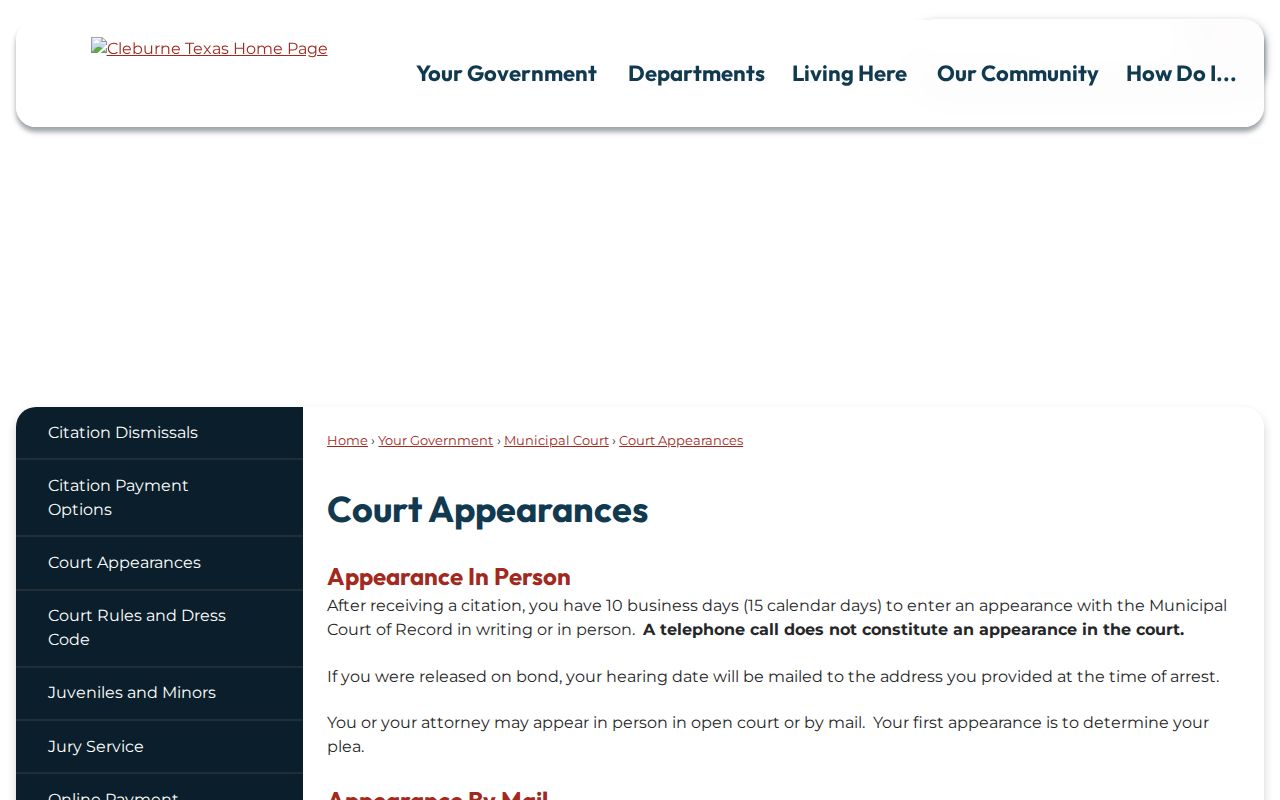
Cleburne’s court page uses 10 business days or 15 calendar days to enter an appearance, while Burleson gives 20 working days or the appearance date. Alvarado gives 30 calendar days. Those are local instructions, not one Johnson County deadline.
Cleburne also says a phone call does not count as an appearance and describes a written continuance motion at least 72 hours before court, subject to a judge’s approval. Check the city’s current page for the rule that applies to the citation.
The Cleburne appearances page states its timing and continuance conditions.
Do not apply one city’s deadline to a different court’s notice.
Bench Warrants and Arrest Warrants Compared
A bench warrant usually follows a court obligation in an existing case; an arrest warrant may authorize arrest after a sworn complaint or affidavit. Johnson County’s city courts sometimes use “arrest warrant” for a missed initial appearance. The wording on a local page should therefore be read in context.
| Feature | Bench Warrant | Arrest Warrant |
|---|---|---|
| Trigger | Missed appearance or unmet court term | Judicial process based on a sworn complaint or affidavit |
| Who issues it | Judge of the court with the case | Judge or magistrate |
| Record route | Issuing municipal, JP, county, or district court | Issuing court and its clerk |
| Next step | Ask about setting, payment, bond, recall, or hardship | Confirm with the court and get legal advice |
Johnson County Bench Warrant Service Has Local Roles
In Burleson, the City Marshal arrests people on municipal warrants, transports prisoners held on Municipal Court warrants, serves court papers, and provides court security. The county sheriff’s office has separate patrol, corrections, records, and open-records functions. A city warrant is not automatically a sheriff roster entry.
For a municipal case, ask the city court or marshal about service and confirmation. For a county or district case, use the named clerk and sheriff channels. Neither office can substitute for a recall order from the issuing court.
The Burleson City Marshal page describes the city role.
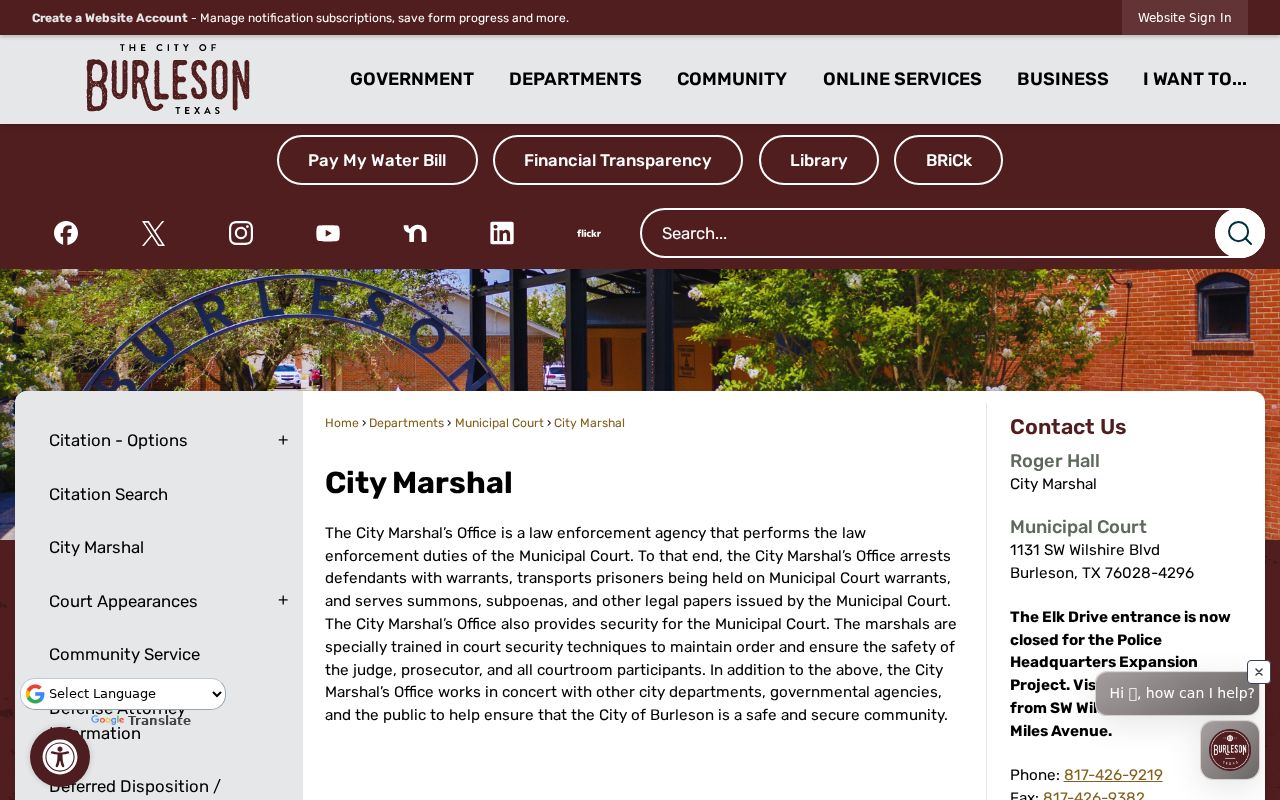
The marshal page separates local warrant service from the court’s authority to change a case.
Resolving a Johnson County Bench Warrant
First confirm the issuing court and exact instrument. Ask whether the court expects a new appearance, payment, bond, community service, a hardship hearing, or a motion to recall. A lawyer can help assess whether a voluntary appearance or motion to quash is the right path. Keep the receipt or order and check that the court updated its file.
- Call the clerk named on the citation or case record and ask for the current warrant term and status.
- Ask what action the judge requires and whether a bond, setting, payment, or hardship request applies.
- Confirm whether the court offers safe-harbor language before choosing a walk-in appearance.
- Keep the receipt or signed order, then recheck the court’s record after its stated update time.
Caution: Do not assume a bench warrant expires or clears through time alone; ask the issuing court whether it has been recalled or resolved.
Safe Harbor for Johnson County Bench Warrants Depends on the City
Cleburne and Keene publish local language allowing a person with a municipal warrant to make a good-faith or voluntary appearance at the court without arrest under the stated conditions. Those rules apply to their city courts only. Johnson County’s sheriff does not publish a matching countywide surrender policy.
Call the court before traveling and ask about hours, case type, and whether the protection covers the exact warrant. A safe-harbor visit may lead to a setting, payment plan, hardship review, or bond process; it does not erase the underlying obligation.
The Keene court’s resolving-warrants page states its voluntary-appearance instructions.
Johnson County Bench Warrant Bonds Depend on Court and Jail
Bond instructions are not uniform. Burleson describes surety or appearance bonds through an authorized bondsman and generally ties cash bond to total fines at the jail. Keene’s rules say the judge sets bond and the payment location can depend on where a person is held. Joshua gives separate cash or attorney-bond options for an arrest warrant after citation.
Do not use a civil constable fee schedule as a criminal bond quote. Ask the issuing court or jail which bond form, amount, and payment type apply to the specific case.
The Burleson bond page explains its local surety and cash options.
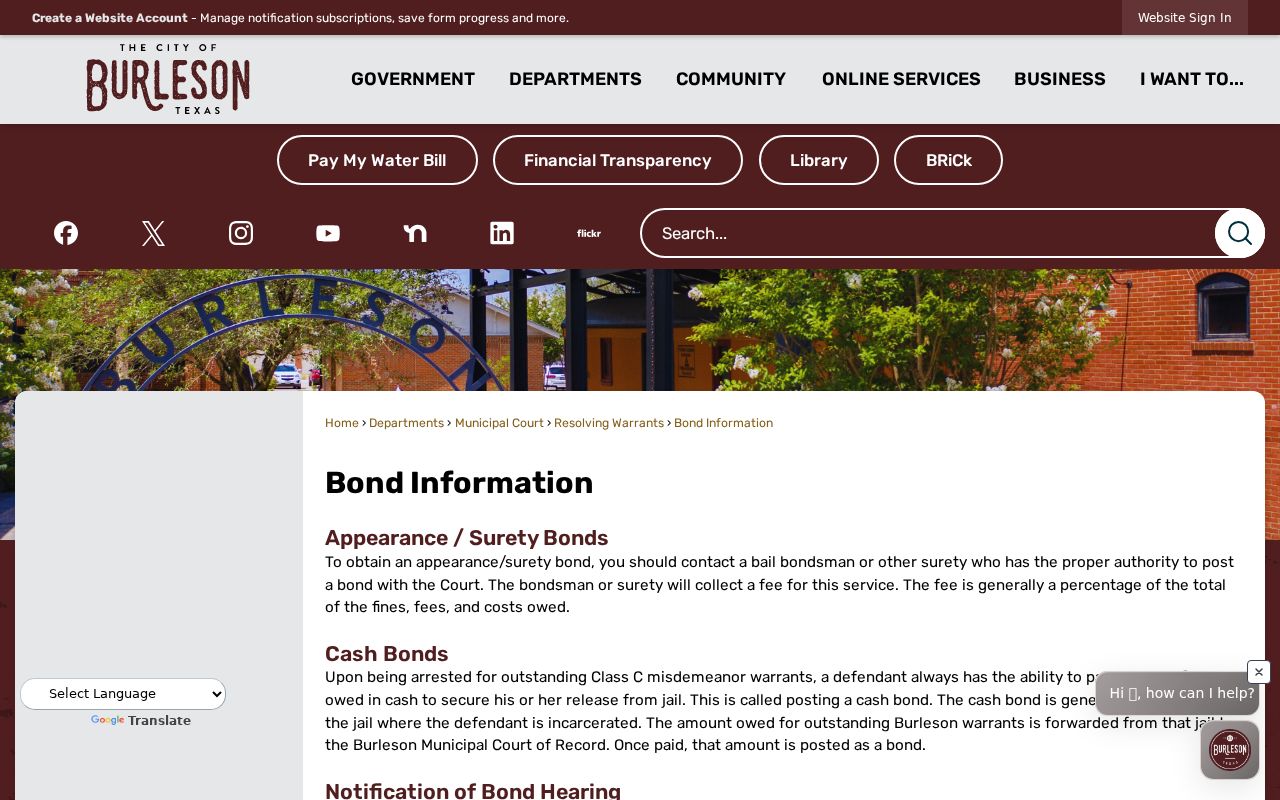
Bond availability and terms come from the court and magistrate for the case.
Finding the Court That Issued the Warrant
A bench warrant stays tied to the court that set the case. A city citation goes to its municipal clerk, a fine-only or traffic case may belong to a JP precinct, and felony matters route to district court. County Court at Law Nos. 1 and 2 records route through the County Clerk Court Section.
Use the Johnson County warrant lookup routes to identify the office, then ask that court about recall or a new setting. The sheriff may serve the order, but the issuing judge controls its status.